

When your furnace turns on but no warm air comes through the vents, there’s a good chance the blower motor isn’t spinning. It’s one of the most common furnace problems homeowners in Los Angeles and across California face — especially when heating season kicks in and the system hasn’t run in months.
The good news is that not every blower problem requires an emergency service call. Before you pick up the phone, check these three things first.
What Does the Furnace Blower Do?
The blower motor is the component responsible for pushing heated air from your furnace through your ductwork and into every room of your home. When it stops spinning — or spins too slowly — your furnace may still produce heat, but that heat never reaches you. The result is a furnace that runs constantly, skyrocketing energy bills, and a home that stays cold.
Check #1: The Capacitor
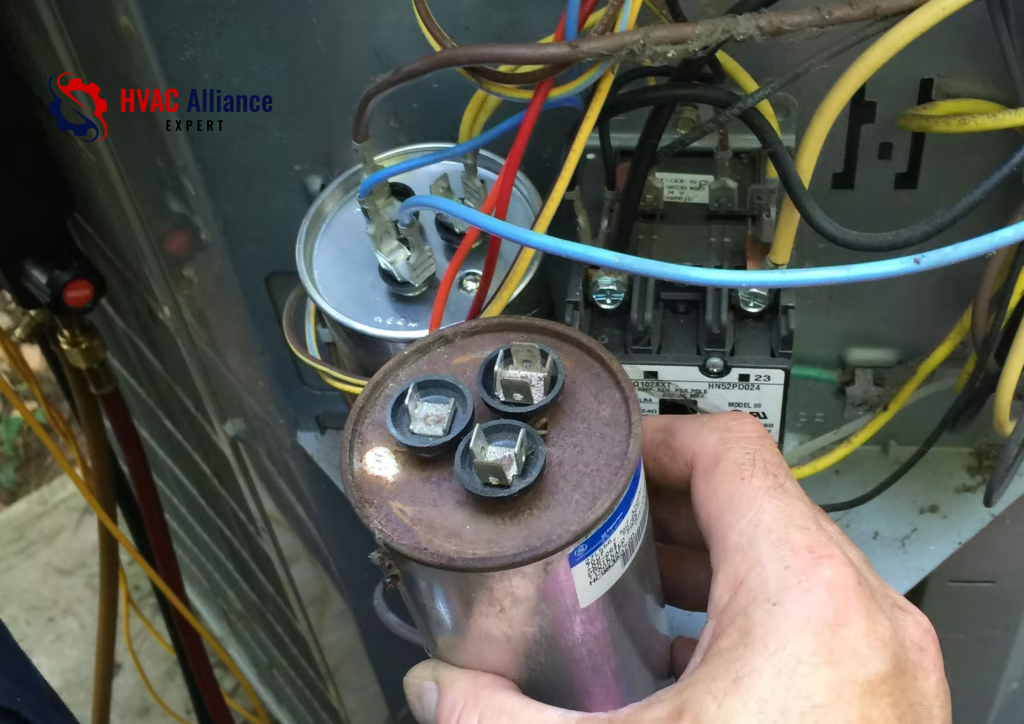
The capacitor is the first thing to check when a furnace blower won’t spin. Think of it as the battery that gives the blower motor the initial jolt of energy it needs to start spinning. Over time — especially after a long off-season — capacitors weaken, swell, or fail entirely.
Signs the capacitor may be the problem:
- You can hear the furnace running and the motor humming, but the blower wheel isn’t turning
- The blower starts slowly or hesitates before spinning up
- The motor runs briefly then shuts off
What to do: A failed capacitor is one of the most affordable furnace repairs available. Replacement parts are inexpensive and a qualified HVAC technician can swap one out quickly — often in a single visit. Do not attempt to handle a capacitor yourself, as it stores an electrical charge even when the furnace is powered off and can cause serious injury.
Check #2: The Blower Motor Itself
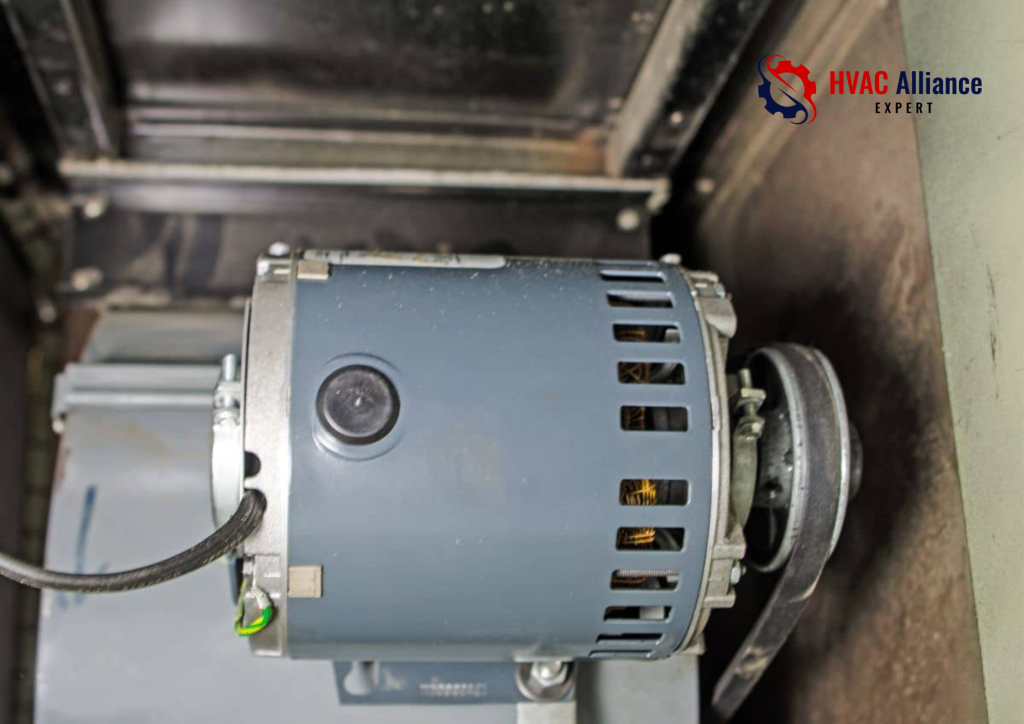
If the capacitor checks out, the next thing to look at is the blower motor. Blower motors run thousands of hours over a furnace’s lifetime and eventually wear out. Bearings seize, windings burn out, and motors simply reach the end of their service life.
Signs the blower motor may be failing:
- A loud squealing, grinding, or rattling noise coming from the furnace
- The motor feels unusually hot to the touch after attempting to run
- The blower works intermittently — sometimes spinning, sometimes not
- A burning smell coming from the vents or furnace cabinet
What to do: A failing blower motor needs to be replaced by a certified HVAC technician. Motor replacement is a moderate repair that varies in cost depending on your furnace make and model. In most cases, replacing the motor is significantly more cost-effective than replacing the entire furnace — particularly if your system is less than 15 years old.
Check #3: The Control Board or Thermostat Signal
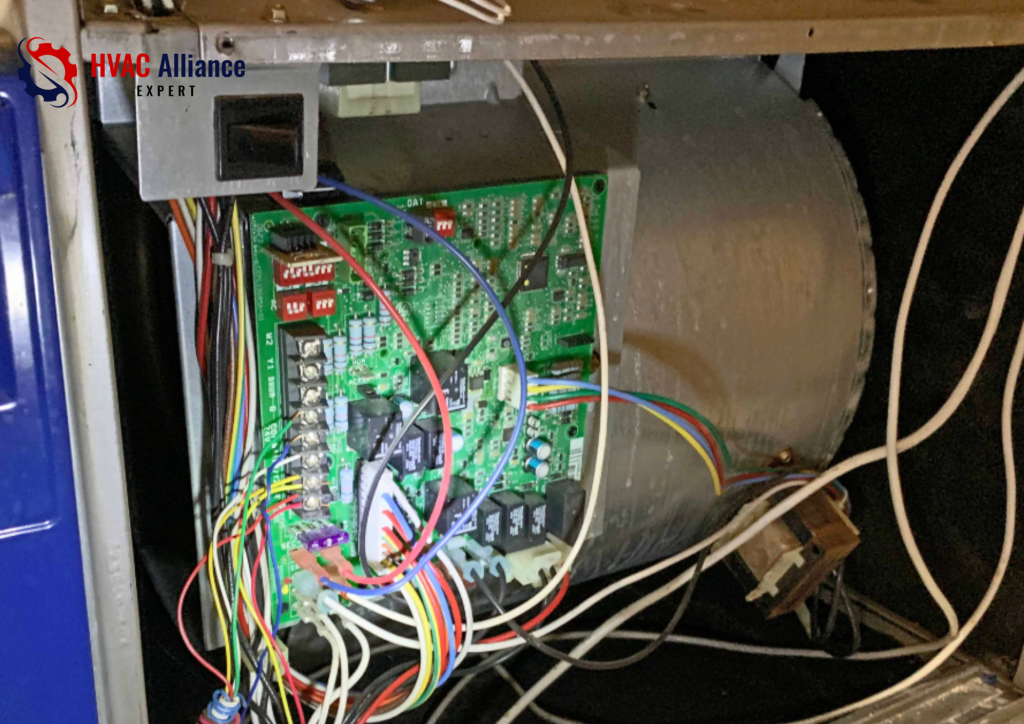
If both the capacitor and motor appear to be in working order, the problem may not be mechanical at all. The control board is the brain of your furnace — it receives signals from the thermostat and tells each component, including the blower motor, when to turn on and off. A faulty control board or a wiring issue can prevent the blower from ever receiving the signal to start.
Signs the control board may be the issue:
- The furnace lights and heats, but the blower never activates
- Error codes or blinking lights appear on the furnace display panel
- The blower works on “fan only” mode from the thermostat but not during a heating cycle
- You notice burn marks, damaged wiring, or a blown fuse on the board
What to check first:
- Make sure your thermostat is set to HEAT and the fan is set to AUTO
- Check your home’s circuit breaker — a tripped breaker can cut power to the blower independently of the furnace ignition
- Replace the thermostat batteries if applicable
- Look for any error codes on your furnace display and cross-reference them with your owner’s manual
If the control board itself is faulty, this is a repair for a professional. Control board replacement requires proper diagnosis to confirm it is actually the source of the problem before investing in the part.
Other Possible Causes Worth Mentioning
While the three checks above cover the majority of blower issues, a few other factors can contribute to a blower not spinning:
- Dirty or clogged air filter — A severely restricted filter can cause the furnace to overheat and trigger a safety shutoff that stops the blower. Check and replace your filter first — it takes two minutes and costs almost nothing.
- Worn or broken blower belt — Older belt-driven furnaces use a rubber belt to connect the motor to the blower wheel. A snapped or worn belt will prevent the blower from spinning even if the motor is running fine.
- Seized blower wheel — Debris, buildup, or a foreign object can jam the blower wheel physically. If you can safely access the blower compartment, visually inspect the wheel for obstructions.
How to Prevent Blower Motor Problems
A little routine maintenance goes a long way toward keeping your furnace blower running smoothly season after season:
- Replace your air filter every 1 to 3 months to prevent overheating and airflow restriction
- Schedule annual furnace tune-ups before heating season — a technician will inspect the blower motor, capacitor, and control board as part of a standard service
- Keep the area around your furnace clear of debris, storage, and obstructions
- Listen for unusual noises during operation — catching a failing bearing early can save you from a full motor replacement later
When to Call HVAC Alliance Expert
If you’ve checked all three items above and your furnace blower still isn’t spinning, it’s time to call in a professional. Attempting to repair electrical components like capacitors, motors, or control boards without proper training can result in injury, further damage to your system, or voiding your equipment warranty.
At HVAC Alliance Expert, our certified HVAC technicians serve homeowners across Los Angeles, Orange County, Pasadena, San Francisco, and beyond — 24 hours a day, 7 days a week. We diagnose fast, explain clearly, and fix it right the first time.
📞 Call us today at (855) 999-4417 to schedule a furnace inspection — and get your heat back before the next cold night hits.
FAQs
This is a classic sign that the blower motor isn’t spinning. The furnace is producing heat, but without the blower pushing air through the ducts, nothing reaches your vents. Start by checking the capacitor, blower motor, and control board signal.
Yes. A severely clogged filter restricts airflow so dramatically that the furnace overheats and triggers a high-limit safety switch, which shuts down the blower to protect the system. Always check your filter first — it’s the easiest and cheapest fix.
Blower motor replacement in the Los Angeles area typically ranges from $300 to $700 including parts and labor, depending on the motor type and furnace model. A capacitor replacement is much less expensive, usually between $75 and $200.
Common signs include a blower motor that hums but won’t start spinning, a motor that starts slowly or hesitates, or a blower that shuts off shortly after starting. A technician can test the capacitor with a multimeter in minutes.