

Are you puzzled about the right heating and cooling capacities for your space? In this guide, we’ll demystify the world of BTUs, exploring the crucial heating BTU calculator and air conditioner BTU per square foot considerations to ensure your comfort year-round. Let’s dive in!
What is BTU?
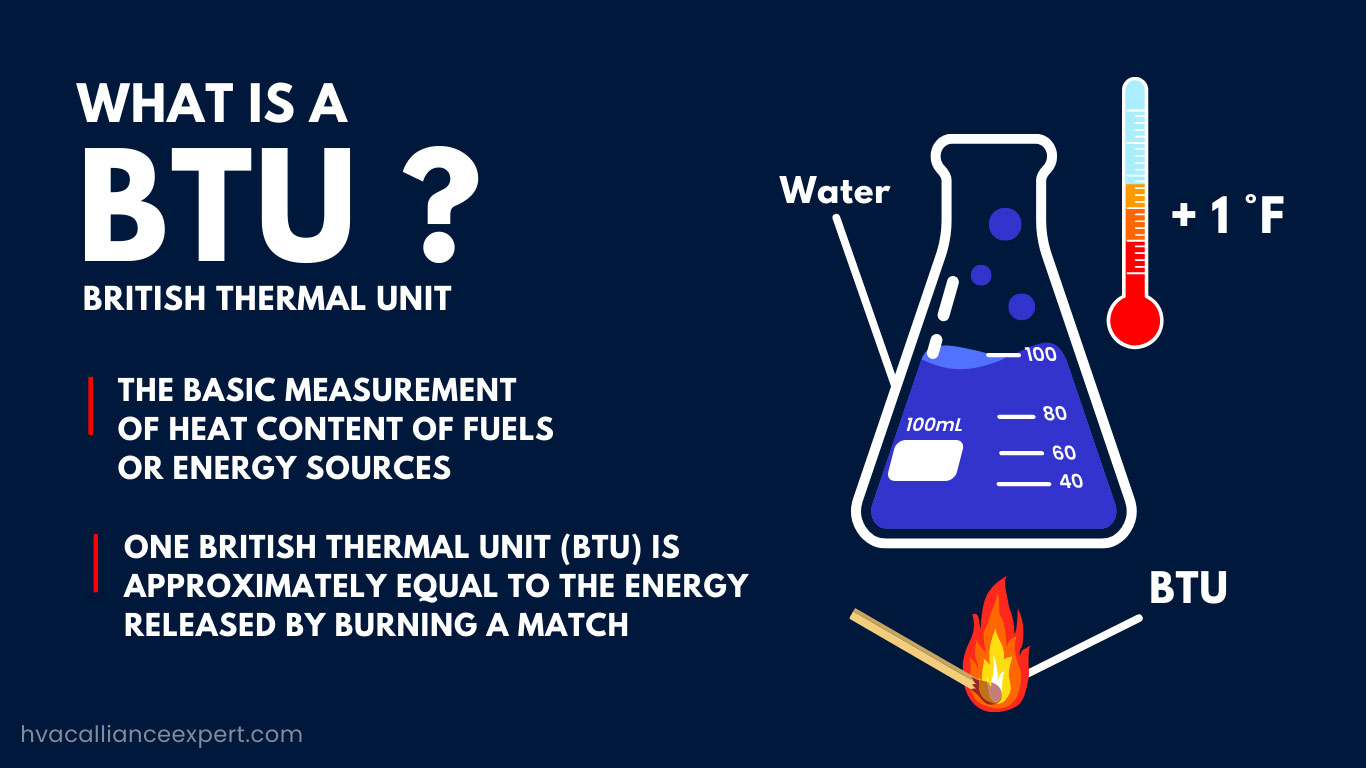
BTU, or British Thermal Unit, is a unit of measurement for heat energy. It quantifies the amount of energy required to raise the temperature of one pound of water by one degree Fahrenheit. In heating and cooling systems, BTUs are used to determine the capacity needed to heat or cool a space effectively. Understanding BTU is crucial for sizing HVAC equipment and ensuring comfort and energy efficiency in indoor environments.
Importance of BTU in Heating and Cooling

- Proper Sizing: The BTU per sq ft heating and AC BTU per square foot calculations are crucial for sizing your heating and cooling systems accurately. An inadequate BTU capacity can lead to discomfort – whether shivering in the winter or sweating in the summer.
- Energy Efficiency: Getting the right BTU per square foot heating and air conditioner BTU per square foot ensures that your HVAC system operates efficiently. An undersized system will strain to maintain the desired temperature, resulting in higher energy consumption and increased utility bills. Conversely, an oversized system might cycle on and off frequently, also wasting energy.
- Cost Savings: Matching the BTU output of your HVAC system to your space’s square footage can lead to cost savings. An energy-efficient system will use less energy to maintain a comfortable environment, ultimately reducing heating and cooling expenses.
How BTU Impacts Energy Efficiency
The relationship between BTUs and energy efficiency is profound:
- Reduced Energy Consumption: Accurate BTU calculations ensure your HVAC system is neither overworked nor underutilized. As a result, it consumes only the necessary amount of energy to maintain the desired indoor temperature, reducing energy consumption.
- Environmental Benefits: Energy-efficient HVAC systems have a smaller carbon footprint. Using fewer BTUs means lower energy consumption and a reduced environmental impact. It’s a responsible choice for those looking to decrease their ecological footprint.
- Extended Equipment Lifespan: Properly sizing your heating and cooling systems based on BTUs needed per square foot can extend their lifespan. When a system doesn’t have to operate at maximum capacity all the time, it experiences less wear and tear, reducing the need for costly repairs and replacements.

Factors Determining BTU Requirement
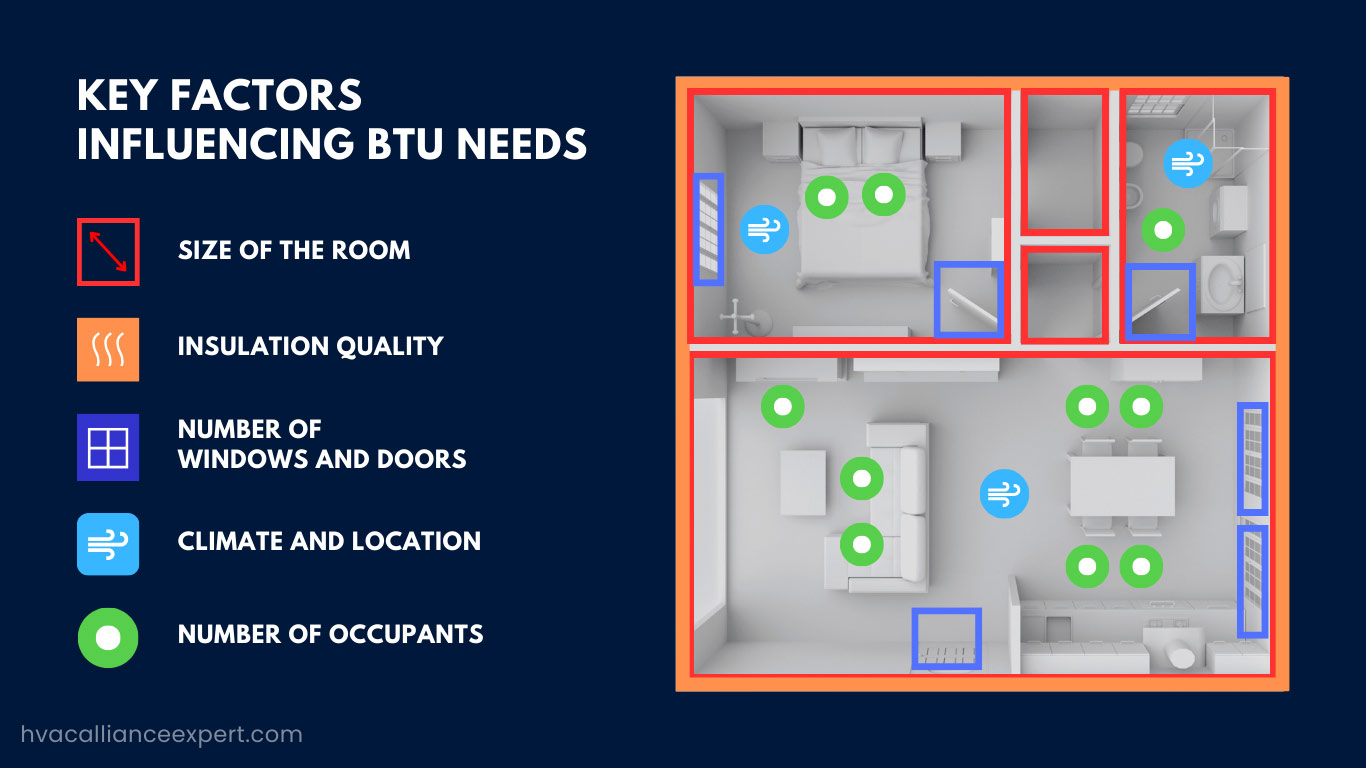
When estimating BTU for heating or cooling, several factors come into play. Understanding these factors is essential for ensuring your indoor environment remains comfortable and energy-efficient. Let’s delve into the key considerations that determine your BTU requirements.
Size of the Room

The size of the room is a fundamental factor influencing your BTU requirement. Larger spaces generally require more BTUs to reach and maintain the desired temperature. Conversely, smaller rooms need fewer BTUs. To estimate the appropriate BTU capacity for your space, you can use a British Thermal Unit calculator or follow a simple rule of thumb:
- For rooms under 150 square feet, allocate 5,000 BTUs per hour per square foot.
- For rooms between 150 and 350 square feet, allocate 5,000 BTUs plus an additional 1,000 BTUs for every 100 square feet over 150.
- For rooms over 350 square feet, divide the room into sections, calculate the BTUs for each section separately, and then add them together.
Insulation Quality
The level of insulation in your space plays a significant role in BTU requirements. Well-insulated rooms are better at retaining heat in the winter and cool in the summer, reducing the workload on your heating and cooling systems.
If your space is well-insulated with good-quality insulation materials in the walls, roof, and floors, you’ll generally require fewer BTUs to maintain a comfortable temperature. On the other hand, poorly insulated rooms allow heat to escape in the winter and enter in the summer, necessitating a higher BTU capacity for temperature control.

Number of Windows and Doors

The number, size, and quality of windows and doors in a room can impact its BTU requirement significantly. Windows and doors are points of heat exchange with the outdoors.
- Large or inefficient windows can allow heat to escape or enter, increasing BTU needs.
- Single-pane windows are less energy-efficient than double-pane or insulated windows.
- Exterior doors with proper weather stripping and insulation are more effective at retaining indoor temperatures.
To estimate BTU requirements accurately, consider the type and condition of windows and doors in your space.
Climate and Location
The climate of your region and the specific location of your space within it are crucial factors. Colder climates require more BTUs for heating, while hotter climates need more for cooling. Additionally, factors like altitude and proximity to bodies of water can influence temperature variations, affecting BTU needs.
For instance, a home in a northern region may require a higher BTU capacity for heating during winter, while a home in a hot, humid southern climate may need more BTUs for cooling during summer.

Number of Occupants

The number of people regularly occupying a room also impacts its BTU requirement. People generate heat through their bodies, electronic devices, and activities. In a room with more occupants, you’ll need a higher BTU capacity to maintain a comfortable temperature.
For example, a crowded conference room with multiple occupants will need more cooling capacity to counteract the heat generated by people and electronic equipment. Conversely, a rarely occupied guest bedroom may require less heating or cooling.
How to Calculate BTU Per Square Foot

Calculating BTU per square foot is crucial for determining the appropriate capacity of your heating or cooling system, ensuring optimal comfort and energy efficiency. Let’s explore the steps to calculate BTU per square foot.
BTU Calculation Formula
The BTU calculation formula involves several factors, including the room’s size, insulation quality, climate, and desired indoor temperature. The general formula for estimating BTU per square foot is as follows:
BTUs per square foot = (Square footage of the room) × (Climate factor) × (Insulation factor) × (Temperature difference factor)
Here’s a breakdown of each factor:

- Square Footage of the Room: Measure the length and width of the room and multiply these dimensions to get the square footage. For irregularly shaped rooms, divide them into smaller, regularly shaped sections and calculate each section’s square footage separately.
- Climate Factor: The climate factor considers whether you need heating or cooling. For heating, use a factor of 20 BTUs per square foot, while cooling requires 25 BTUs per square foot.
- Insulation Factor: Assess the insulation quality of your space. Well-insulated rooms typically need 10% fewer BTUs, while poorly insulated rooms may require up to 20% more BTUs. Adjust the factor accordingly.
- Temperature Difference Factor: Determine the temperature difference between the desired indoor temperature and the average outdoor temperature. The greater the difference, the more BTUs you’ll need. For example, if the desired indoor temperature is 70°F, and the average outdoor temperature is 10°F, the temperature difference is 60°F.
Now, let’s put the formula into practice with an example.

Example Calculations
Suppose you have a 300-square-foot living room that needs cooling in a hot climate, with excellent insulation, and you want to maintain a 70°F indoor temperature when the outdoor temperature averages 90°F.
- Calculate the climate factor for cooling: 25 BTUs per square foot.
- Assess the insulation factor: Since the room has excellent insulation, reduce the factor by 10%, making it 90% (0.9).
- Determine the temperature difference factor: The temperature difference is 90°F (outdoor) – 70°F (indoor) = 20°F.
- Plug the values into the formula:
BTUs per square foot = (300 sq ft) × (25 BTU/sq ft) × (0.9) × (20°F) = 135,000 BTUs
So, for this example, you would need a cooling system with a capacity of approximately 135,000 BTUs to effectively cool the 300-square-foot living room in a hot climate with excellent insulation and a desired indoor temperature of 70°F.
Calculating BTU per square foot is crucial in ensuring your heating and cooling systems are appropriately sized for your space, promoting comfort and energy efficiency. While the formula provides a general guideline, it’s essential to consider other factors, such as the number of occupants and the quality of windows and doors, to make the most accurate calculations for your situation. Utilizing an aircon BTU calculator can also simplify this process and help you determine your heating and cooling needs more precisely.
Common BTU Requirements for Different Room Sizes
When selecting the right air conditioner or heater for a room, understanding the common BTU requirements for different room sizes is essential. This knowledge can help you ensure that your HVAC system is appropriately sized, providing efficient and comfortable temperature control.
- Small Rooms (100-300 Square Feet):For small rooms, such as bedrooms or home offices, the BTU requirements typically range from 5,000 to 7,000 BTUs. A smaller space requires fewer BTUs per square foot, as it is easier to heat or cool efficiently.
- Medium Rooms (300-550 Square Feet):In medium-sized rooms, like living rooms or small apartments, you’ll generally need between 7,000 and 14,000 BTUs. The BTU per square foot may vary within this range, depending on factors like insulation quality and climate.
- Large Rooms (550-1,200 Square Feet):For larger rooms, such as master bedrooms, open-plan living spaces, or even small offices, BTU requirements typically fall between 14,000 and 24,000 BTUs. These rooms require a higher BTU per square foot to ensure consistent and comfortable heating or cooling.
- Extra-Large Rooms (1,200+ Square Feet):Rooms exceeding 1,200 square feet, such as spacious living areas or commercial spaces, will need more significant HVAC systems, often in the range of 24,000 BTUs or more. These areas have a higher BTU per square foot requirement due to their size and the need to distribute air effectively.
It’s important to note that these standard BTU requirements provide general guidelines. Other factors, such as insulation quality, climate, the number of occupants, and the presence of large windows or doors, can influence the BTU calculation. Therefore, using an AC BTU calculator or BTU per sq foot air conditioner calculator can help you determine the precise BTU requirement for your specific room and circumstances.
Remember that selecting an HVAC system with the appropriate BTU capacity is crucial for maintaining comfort and maximizing energy efficiency. An undersized system will struggle to heat or cool adequately, while an oversized one can lead to energy waste. By understanding and applying BTU requirements based on room size and other relevant factors, you can ensure optimal performance from your heating and cooling systems while managing energy costs effectively.
Tips for Choosing the Right HVAC System Based on BTU

Selecting the right HVAC (Heating, Ventilation, and Air Conditioning) system based on the appropriate BTU (British Thermal Unit) capacity is crucial for maintaining comfort and energy efficiency in your home or office. Here are some essential tips to guide you through the process:
- Calculate Your BTU Requirements: The first step in choosing the right HVAC system is to calculate how many BTUs per square foot your space needs. This calculation depends on various factors, including the climate zone you’re in, the insulation in your building, the number of windows and doors, and the overall size of the area. Generally, you’ll need around 20-25 BTUs per square foot for cooling and 30-35 BTUs per square foot for heating.
- Choose the Right Type of System: Depending on your needs, you can opt for a central HVAC system, ductless mini-split systems, window or portable air conditioners, or space heaters. Each type has its BTU capacity ranges, so ensure it aligns with your calculated requirements.
- Factor in Insulation and Climate: If your space is well-insulated, you may require fewer BTUs for heating or cooling per square foot. Conversely, in extreme climates, you may need a higher BTU capacity to offset temperature variations. Adjust your calculations accordingly.
- Consider Zoning: If your home has different zones with varying heating and cooling needs, consider a zoned HVAC system. Zoning allows you to control the temperature of individual areas separately, optimizing comfort and energy usage.
- Consult with a Professional: For precise calculations and recommendations, consult with a heating and cooling professional. They can assess your specific needs, taking into account factors you may overlook, and recommend the right HVAC system size and type.
- Check Energy Efficiency Ratings: Look for HVAC systems with high Energy Star ratings. Energy-efficient units can save you money on energy bills and reduce your environmental footprint.
- Maintenance and Regular Servicing: Once you’ve installed the right HVAC system, ensure it operates efficiently by scheduling regular maintenance. Clean or replace filters, check for leaks, and have a professional inspect the system to keep it running optimally.
- Avoid Oversizing: Resist the temptation to oversize your HVAC system. An oversized unit may cycle on and off frequently, leading to increased wear and tear and reduced energy efficiency. Stick to the BTU requirements for your space.
- Invest in Proper Insulation: Improve the insulation of your home or office to reduce the BTU requirements for heating and cooling. Adequate insulation can make a significant difference in maintaining a consistent temperature and energy savings.
- Explore Smart Thermostats: Smart thermostats allow you to control your HVAC system remotely and program temperature settings based on your daily routine. They can help optimize energy usage and maintain comfort.
- Consider Future Needs: Think about any potential changes in your living or working space. If you plan to expand or remodel, factor in these changes when selecting your HVAC system to ensure it remains suitable for your needs.
Air Conditioning & Heating BTU Calculator and Chart
Ensuring your home or commercial space is adequately cooled or heated requires a precise understanding of the BTU (British Thermal Unit) requirements. The BTU rating measures the cooling or heating capacity you need to maintain a comfortable environment. To help you determine the right BTU capacity for your space, we’ve provided a handy calculator and a chart below:
BTU Calculator:
To determine the BTU requirements for cooling, use this formula:
(Area in Square Feet) x (BTU per Square Foot for Cooling) = Required BTUs for Cooling
For heating needs, use this formula:
(Area in Square Feet) x (BTU per Square Foot for Heating) = Required BTUs for Heating
BTU Reference Chart:
Refer to this handy BTU chart to estimate your cooling and heating needs based on your room size:
| Room Size (Square Feet) | Cooling BTU Range | Heating BTU Range |
| Small Bedrooms (100-200 sq. ft.) | 2,000-4,000 | 3,000-6,000 |
| Larger Bedrooms (200-400 sq. ft.) | 4,000-8,000 | 6,000-12,000 |
| Living Rooms (400-800 sq. ft.) | 8,000-16,000 | 12,000-24,000 |
| Open-Concept Areas (800-1,200 sq. ft.) | 16,000-24,000 | 24,000-36,000 |
| Small Apartments (800-1,000 sq. ft.) | 16,000-20,000 | 24,000-30,000 |
| Medium Apartments (1,000-1,500 sq. ft.) | 20,000-30,000 | 30,000-45,000 |
| Large Apartments or Small Houses (1,500-2,500 sq. ft.) | 30,000-50,000 | 45,000-75,000 |
| Medium Houses (2,500-3,500 sq. ft.) | 50,000-70,000 | 75,000-105,000 |
| Large Houses (3,500-5,000+ sq. ft.) | 70,000-100,000+ | 105,000-150,000+ |
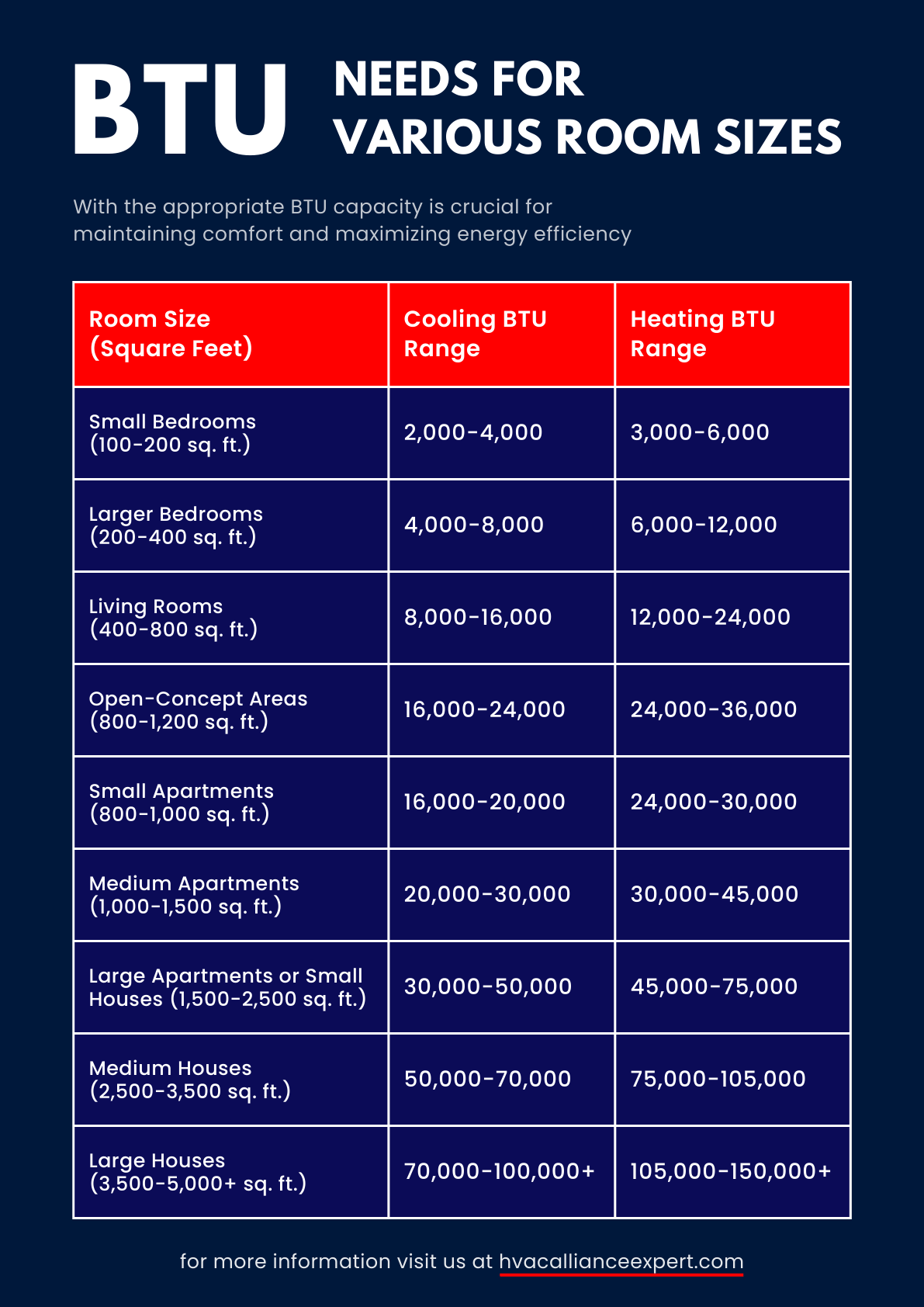
The BTU chart for heating and cooling serves as a valuable reference. Remember that these values are general guidelines, and your specific BTU requirements may vary depending on factors like local climate, insulation quality, window types, and room usage. To ensure the most suitable AC unit BTU chart or BTU chart for heating for your unique needs, consulting with an HVAC professional is recommended.
With the help of this BTU calculator and reference chart, you can confidently choose an air conditioning and heating system that will efficiently regulate your indoor environment, ensuring year-round comfort and energy efficiency.
Conclusion
In conclusion, understanding BTUs and calculating your specific requirements is crucial for efficient heating and cooling. For HVAC services, including air conditioner repair and furnace repair, consider reaching out to HVAC Alliance Expert. Our services are affordable, economical, and provided by licensed technicians who prioritize your comfort. Don’t hesitate to contact us for all your HVAC needs.
FAQs on BTU calculation
BTU stands for British Thermal Unit. It’s important as it measures heating/cooling capacity, helping choose the right HVAC system for comfort and efficiency.
Room size directly impacts BTU requirements. Larger rooms need more BTUs for effective cooling/heating, while smaller rooms require fewer BTUs.
Yes, excessive BTUs can lead to overcooling/heating, resulting in discomfort, energy waste, and potential short cycling, reducing system efficiency and lifespan.
Climate and location affect BTU needs; hot climates demand more cooling, cold climates require more heating, impacting HVAC sizing for efficiency.
Insulation affects BTU requirements by reducing heat transfer; well-insulated spaces need fewer BTUs, while poorly insulated areas require more.
Yes, heating and cooling have different BTU requirements; typically, cooling requires fewer BTUs than heating to maintain comfort in a space.