

If you have a central air conditioning system, this could be one of the most important guides you will ever read. At some point, you are going to get a clogged AC drain line — and when you do, the first sign is usually water stains appearing on your ceiling that seem to come from nowhere. What is actually happening is that your air conditioning system is directly above that spot and the drain line is plugged, causing water to back up and leak into your home.
The good news is there are a couple of quick fixes you can do yourself to clean your AC drain line, get it unplugged, and get your air conditioning back in business fast — and in this guide we will walk you through both of them step by step.
What Causes a Clogged AC Drain Line?
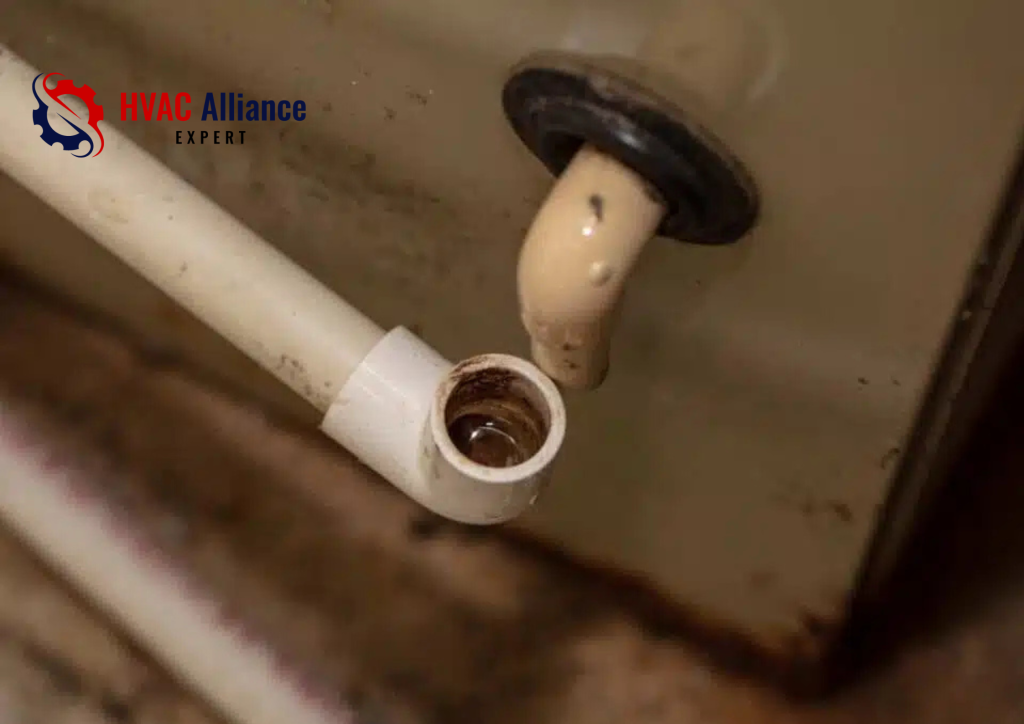
Your AC system produces condensation as it cools your home. That water drips into a drain pan and flows out through a PVC drain line. Over time, algae, mold, sediment, and debris build up inside the line — especially in the drain trap, which is a curved section of pipe near your air handler that holds water and is the most common spot for clogs to form.
The most telling sign that your AC drain line needs cleaning is a slow drip — or no drip at all — coming from the end of the drain pipe outside your home. During normal operation you should see a steady drip of water exiting the line. If it is barely trickling, there is a clog further up the pipe that needs to be cleared.
What You Will Need
For the quick fix:
- Wet/dry shop vacuum
- Rags or tissues
For the deep clean:
- PVC pipe cutter or handsaw
- Flexible wire drain brush
- Rubber tubing (1¼ inch)
- Two hose clamps
- Bucket or towel
- One gallon of water for testing
Fix 1: The Quick Fix — Shop Vacuum Method
This is the fastest and easiest way to clean an AC drain line and for many homeowners it is all you will ever need.
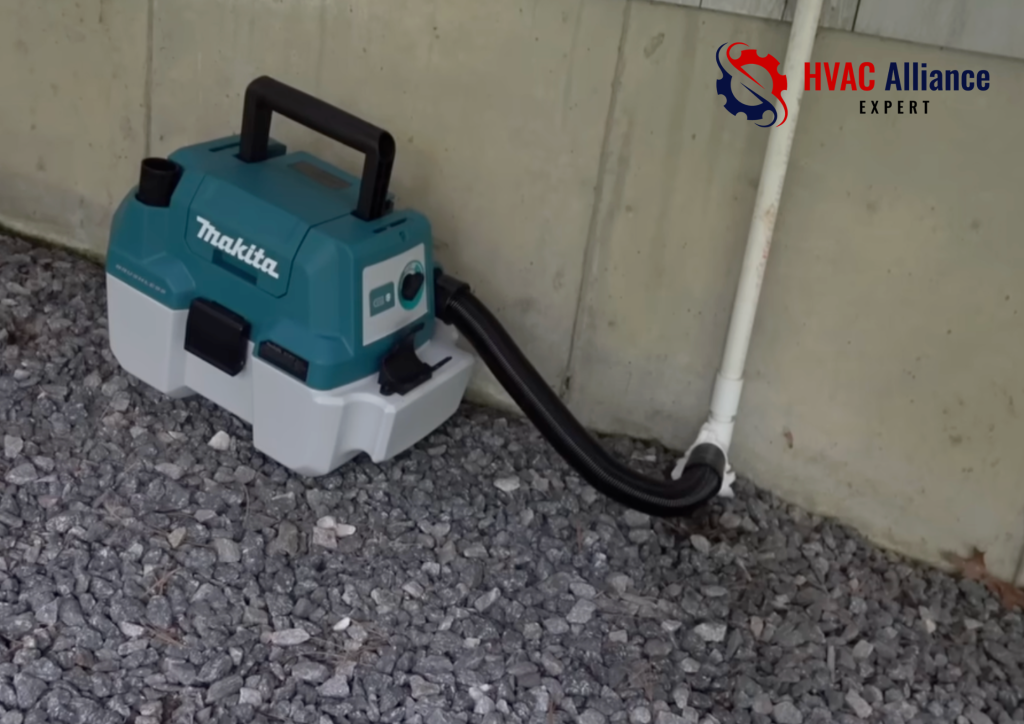
Step 1: Go outside and find your drain line. Look for the white PVC pipe that exits your home near the outdoor AC unit or through an exterior wall. This is where condensation drains out during normal operation.
Step 2: Connect your shop vacuum to the pipe. Your vacuum hose will likely be larger than the drain pipe opening. Simply wrap rags or tissues around the pipe to fill the gap and create as airtight a seal as possible between the pipe and the vacuum hose.
Step 3: Run the vacuum for at least one minute. Turn the vacuum on and let it run. You are sucking any water, algae, and debris out of the drain line from the outside. When you disconnect the vacuum you may see several more gallons of water rush out of the pipe — that is a great sign and means the clog has been cleared.
Step 4: Check what came out. Open the vacuum canister and take a look. If the water inside is dark and dirty, that buildup is part of what was clogging your line.
This method works well as a fast solution when your AC has stopped working or is leaking on a hot day. However it is not always a permanent fix — there may still be buildup inside the line that will clog again. If you want a longer lasting solution, move on to Fix 2.
Fix 2: The Deep Clean — Cut, Brush, and Reconnect
This is the more thorough method for cleaning an AC drain line and it will keep the line clear for a much longer time. Before you start, turn off your air conditioner at the circuit breaker — never work on your AC system while it has power.
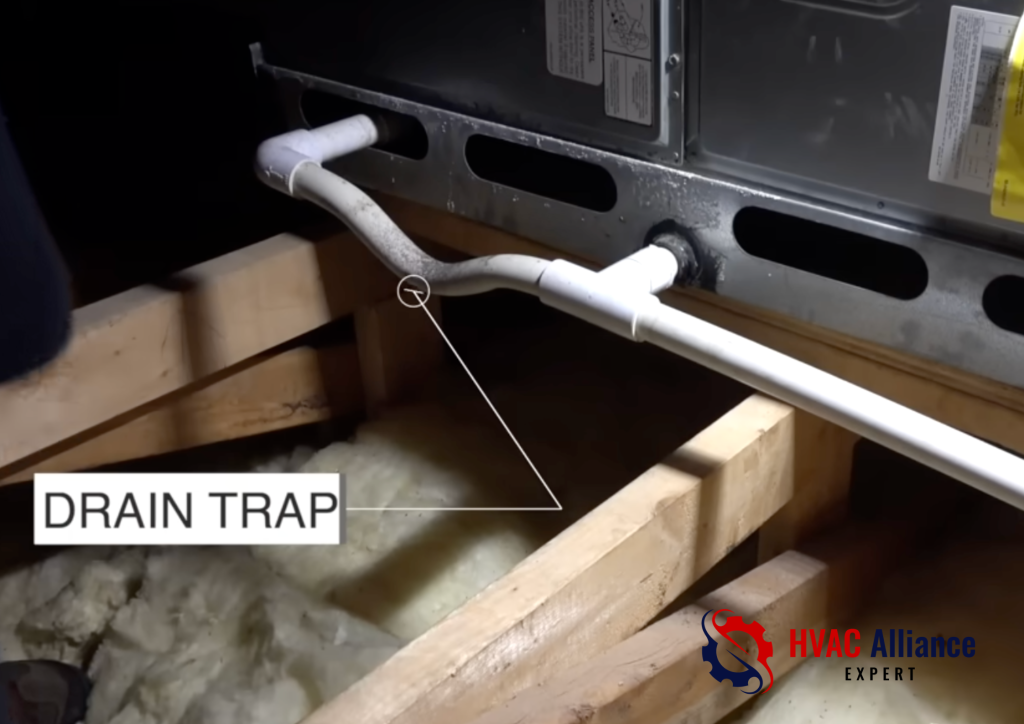
Step 1: Locate the Drain Trap
Go to your air handler — usually located in the attic, closet, or utility room. Look for the white PVC drain pipe that connects to the unit. The section with a slight bend or curve is called the drain trap, and this is where clogs almost always form because it holds water and collects sediment over time.
Step 2: Cut Into the Drain Line
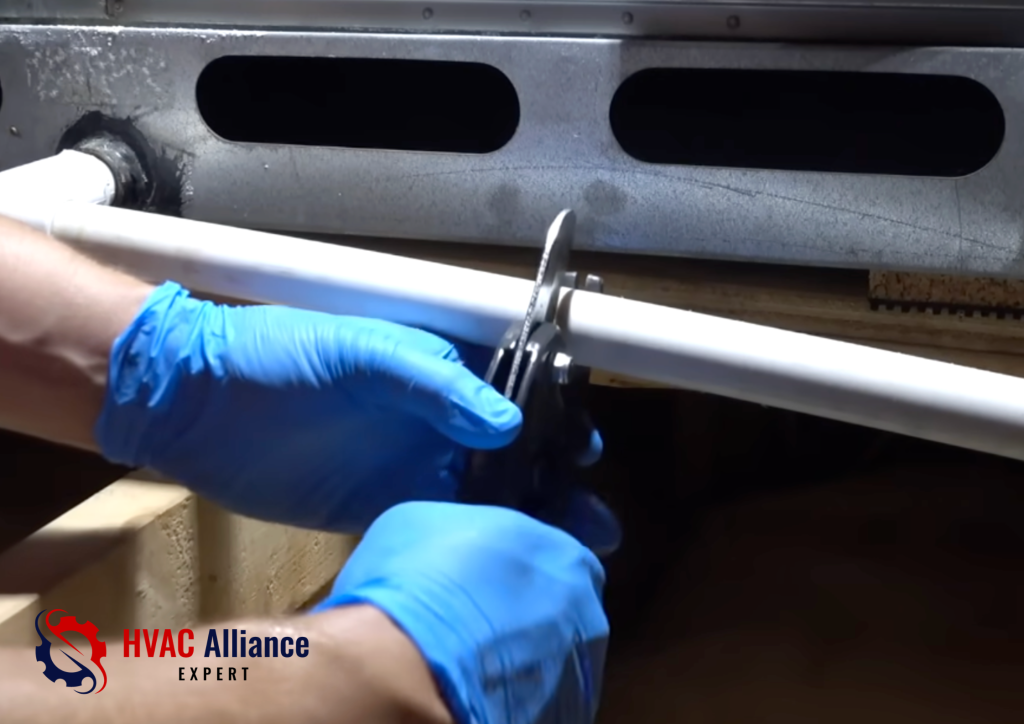
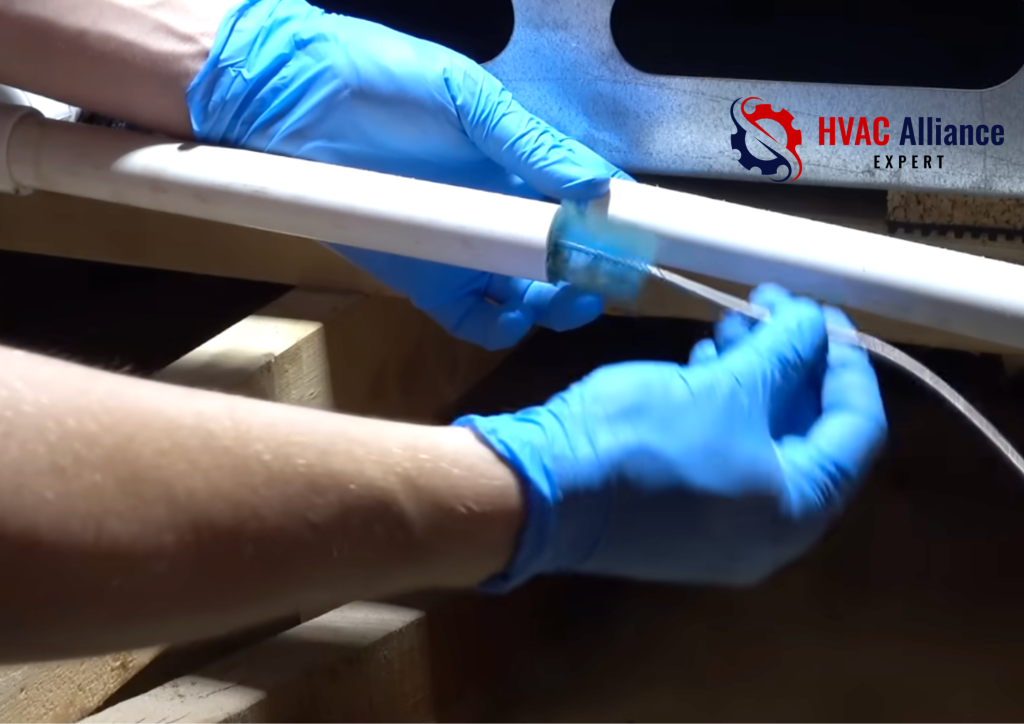
Using a PVC pipe cutter or a handsaw, cut into the drain line about one foot down from the drain trap. This gives you an access point to clean the clog directly. Place a towel or bucket underneath before cutting in case there is any water remaining in the line.
Step 3: Clean the Line With a Wire Brush
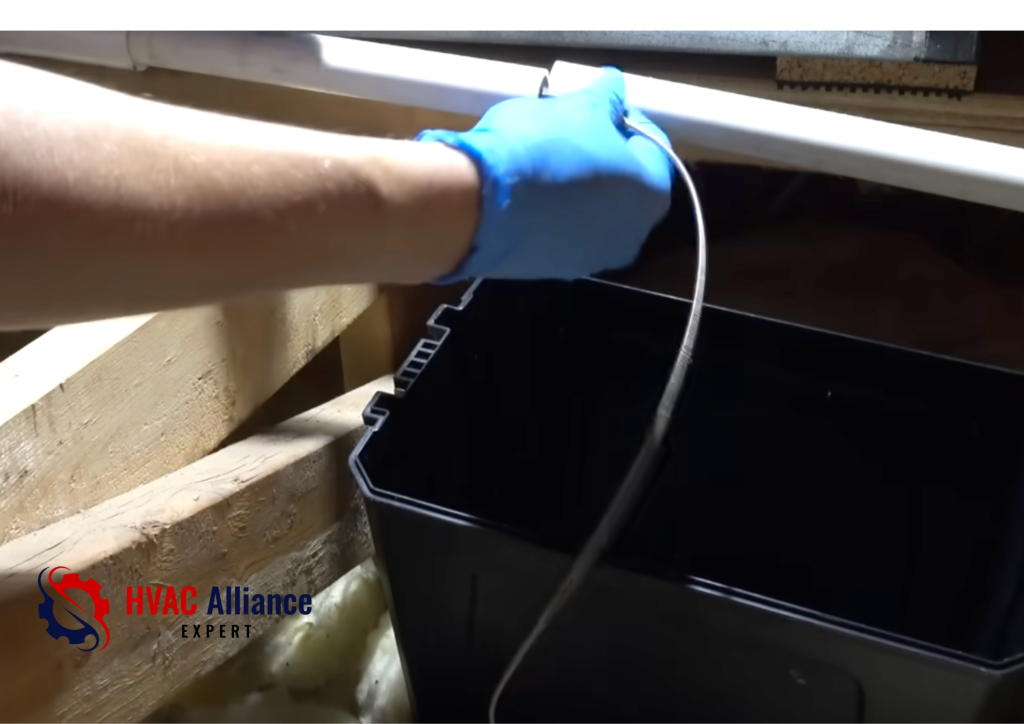
This is where a flexible wire drain brush pays off. Insert the brush into the cut end of the pipe and feed it back toward the drain trap. The flexible wire allows the brush to follow the curve of the trap and scrub out the buildup inside. Work the brush in and out several times until the pipe is clear. The debris that causes these clogs is typically loose sediment so the brush clears it out quickly and leaves the inside of the pipe like new.
Step 5: Clean the AC Drain Line With Vinegar
Pour a cup of distilled white vinegar directly into the drain line through the access point. Vinegar is the most effective and safest way to clean an AC drain line — it kills algae, mold, and bacteria without damaging your pipes. Let it sit for 30 minutes to break down the buildup inside the line.
For a more stubborn clog, you can use a diluted bleach solution — 1 cup of bleach mixed with 1 gallon of water. Do not use bleach more than once a month as it can degrade PVC pipes over time.
After 30 minutes, flush the line with warm water to push the loosened debris through.
Step 6: Use a Wet/Dry Vacuum for Stubborn Clogs
If the vinegar flush did not fully clean the AC drain line, a wet/dry vacuum is your next move. Go outside and find where the drain line exits your home — usually near the outdoor AC unit or through an exterior wall. It is a white PVC pipe that drips water during normal operation.
Place the vacuum hose over the end of the drain pipe and seal the gap with duct tape or your hand to create suction. Run the vacuum for 1 to 2 minutes. This pulls the clog out from the outside rather than pushing it further in.
Check the vacuum canister — if you see dark sludge, algae, or debris, the AC drain line has been successfully cleaned.
Step 7: Test the Drain Line
Pour a cup of water into the drain pan or directly into the access point. Go outside and watch the end of the drain line — water should flow freely out within a minute or two. If it does, the line is clean and clear. If it does not, the clog may be deeper in the line and will need professional attention.
Step 8: Reset Your AC and Monitor
Turn the breaker back on, set your thermostat back to cool, and let the system run for 15 to 20 minutes. Check the drain pan — it should remain empty as the system runs. If it fills up again quickly, there is still a blockage or your float switch may need to be checked.
How to Keep Your AC Drain Line Clean All Year
Once you know how to clean an AC drain line, the key is keeping it clean so you never have to deal with a clog again:
- Clean your AC drain line every 30 days during cooling season — pour one cup of vinegar down the access point monthly to prevent algae from building up
- Change your air filter every 1 to 3 months — a dirty filter allows more dust and debris to reach the evaporator coil and drain pan
- Schedule annual AC maintenance — a professional tune-up includes inspecting and cleaning the AC drain line before the summer season hits
- Install a float switch if your system does not already have one — this automatically shuts the AC off if the drain pan fills up, preventing water damage
- Keep the area around your air handler clean — dust and debris near the unit can make their way into the drain pan
When to Call a Professional
Most homeowners can clean their AC drain line themselves without any issues. Call HVAC Alliance Expert at (855) 999-4417 if:
- The drain line does not clear after vacuuming and flushing
- Water has already leaked onto your ceiling, walls, or floor
- You see mold growth inside the air handler or on the coil
- The drain pan is cracked or damaged and needs replacement
- Your AC repeatedly shuts off on the float switch even after cleaning the drain line — this may indicate a deeper issue with the drain system or the coil itself
- You are not comfortable accessing your air handler
FAQs
The easiest way to clean an AC drain line is to pour one cup of distilled white vinegar into the access point on the drain line, let it sit for 30 minutes, then flush with warm water. For stubborn clogs, use a wet/dry vacuum on the exterior end of the drain pipe to suction out the blockage.
Once a month during cooling season is ideal. A quick vinegar flush takes less than five minutes and prevents the algae buildup that causes most clogs. At minimum, clean your AC drain line at the start of every cooling season.
Yes. When water backs up and sits in the drain pan, it creates a breeding ground for mold and mildew. That mold can spread to the evaporator coil and into your ductwork, affecting your indoor air quality throughout the home.
If your AC is shutting off unexpectedly, a clogged drain line triggering the float switch is one of the most common causes. Check your drain pan — if it has water in it, clean the AC drain line following the steps in this guide.
Yes, but use it sparingly. A diluted bleach solution is effective for killing mold and algae but can degrade PVC pipes if used too frequently. Vinegar is the safer choice for regular monthly cleaning. Use bleach only for stubborn clogs and no more than once per month.