

When a heat wave or deep freeze rolls in, the last thing you want is a failed heating or cooling system. Extreme weather is the ultimate stress test for your HVAC — and systems that haven’t been properly maintained are the first to fail. Here’s how to get ahead of costly breakdowns before severe weather hits.
Why extreme weather is your HVAC's worst enemy
HVAC systems are engineered to handle a range of temperatures, but prolonged exposure to extreme heat or cold pushes every component — compressors, heat exchangers, capacitors, and fans — to its limit. A system running 16+ hours a day during a heat dome faces roughly three times the wear it would in a mild season.
According to industry data, emergency HVAC service calls spike by over 200% during extreme weather events. Most of those calls? Entirely preventable with routine preparation.
Step 1: Replace or clean your air filter
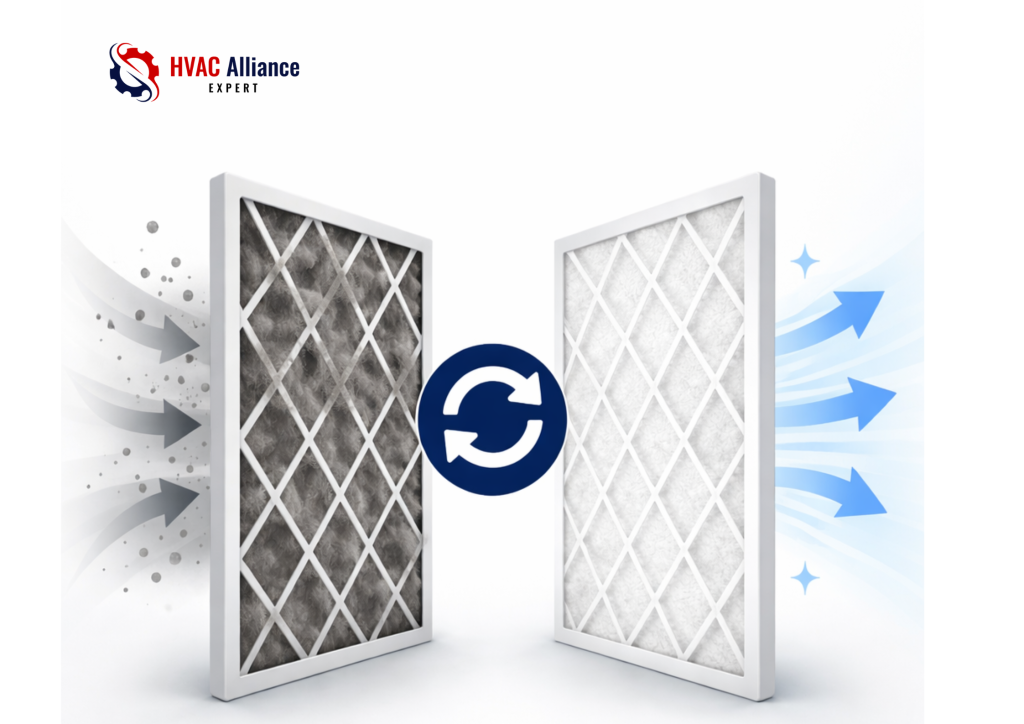
A clogged filter is the single most common cause of HVAC inefficiency and premature failure. During extreme weather, your system runs longer cycles — and a dirty filter makes every one of those cycles harder on the blower motor, evaporator coil, and heat exchanger.
- Check your filter every 30 days during peak season
- Replace 1-inch filters every 1–3 months; thicker media filters every 6–12 months
- Choose a MERV rating of 8–11 for the best balance of airflow and filtration
Step 2: Inspect the outdoor unit
Your condenser unit (the outdoor box) needs clear airflow on all sides. Before extreme heat arrives, clear away debris, trim back vegetation to at least 2 feet, and gently rinse the fins with a garden hose. Bent fins restrict airflow and force the compressor to work harder — often leading to overheating and failure.
Step 3: Test the system before you need it
Don’t wait for the first 100°F day to find out your AC can’t keep up. Run your system for 15–20 minutes when temperatures are still moderate. Listen for unusual sounds — grinding, rattling, or high-pitched squealing — and check that air from the vents is actually cold (or warm, for heating). A system that “barely works” now will fail completely under load.
Step 4: Check your thermostat and refrigerant levels
A failing thermostat can cause short cycling or prevent the system from reaching set temperatures. If you haven’t upgraded to a smart thermostat, now is a good time — they can detect unusual patterns and alert you before a breakdown occurs.
Low refrigerant is another silent killer. If your system is blowing warm air, icing up, or making a hissing sound, you likely have a refrigerant leak that requires a licensed technician to diagnose and repair.
Step 5: Schedule professional maintenance
DIY checks only go so far. A professional tune-up includes cleaning coils, checking electrical connections, testing capacitors, measuring refrigerant pressure, lubricating moving parts, and verifying the system’s overall efficiency. Most HVAC professionals recommend twice-yearly service — once in spring (cooling) and once in fall (heating).
Step 6: Improve your home's insulation and sealing
Even a perfectly functioning HVAC system struggles if your home is poorly sealed. Before extreme weather arrives, check weatherstripping around doors, caulk window frames, and ensure your attic insulation meets current energy code recommendations (typically R-38 to R-60). Reducing the thermal load on your system extends equipment life significantly.
Signs your HVAC may be at risk
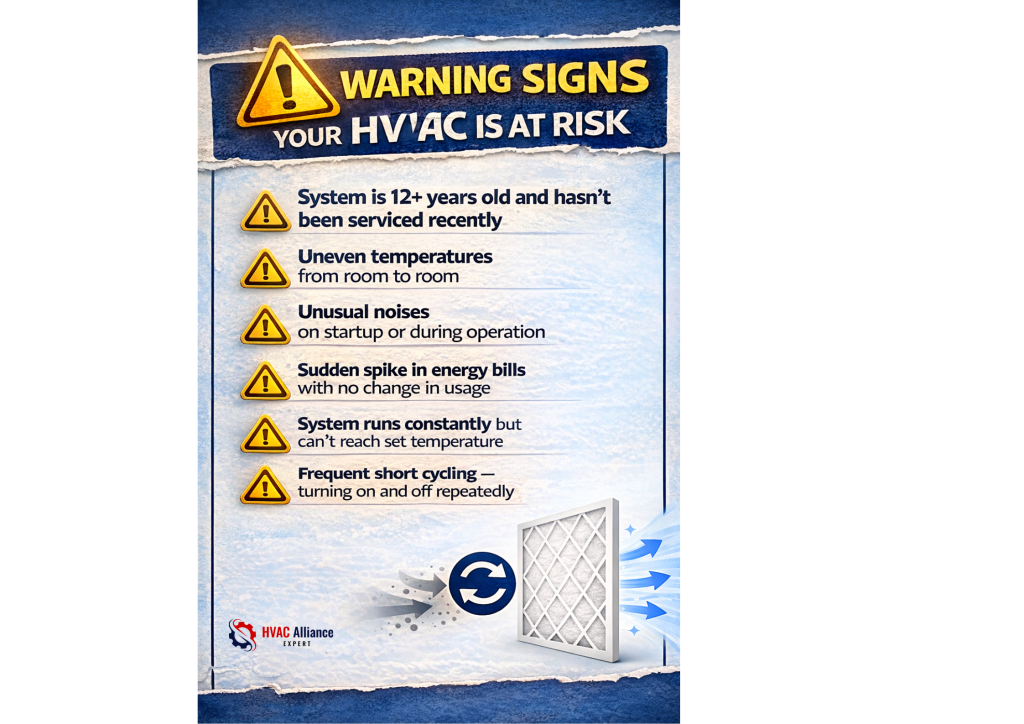
- System is 12+ years old and hasn’t been serviced recently
- Uneven temperatures from room to room
- Unusual noises during startup or operation
- A spike in energy bills without changes in usage
- System runs constantly but can’t meet set temperature
- Frequent short cycling (turning on and off repeatedly)
Conclusion
Extreme weather doesn’t give you a warning — but you can be ready for it. The difference between a home that stays comfortable during a heat dome or winter storm and one that’s scrambling for an emergency HVAC technician almost always comes down to preparation.
By staying on top of filter changes, keeping your outdoor unit clean, running system tests ahead of peak season, and investing in professional maintenance, you’re not just protecting your HVAC equipment — you’re protecting your family’s comfort and your wallet.
Don’t wait until temperatures hit record highs or lows to find out your system isn’t up to the task. Take action now, and when extreme weather arrives, you can sit back and let your HVAC do exactly what it was built to do.
FAQs
Twice a year is the industry standard — once in spring before cooling season and once in fall before heating season. If your area experiences particularly harsh summers or winters, a mid-season check-in isn’t a bad idea either.
Yes, significantly. Every time your system starts up, it puts heavy strain on the compressor — the most expensive component in your AC. Repeated short cycling accelerates wear, shortens the lifespan of your unit, and increases the risk of a full system breakdown.
Common signs include warm air from supply vents, ice buildup on the outdoor unit or refrigerant lines, higher-than-normal electricity bills, and a subtle hissing or bubbling sound. Refrigerant handling requires EPA certification, so always call a licensed technician.
A useful rule of thumb is the “5,000 rule” — multiply the unit’s age by the repair cost. If the result exceeds $5,000, replacement is typically the smarter investment. A new high-efficiency system can also cut energy bills by 20–40%.