

Thermostat wiring can seem like a daunting task, especially with the variety of wire colors and their respective functions.
However, with the correct knowledge, this task can become much easier and can be done without professional assistance. In this guide, we will be explaining the common thermostat wiring color codes and their functions.
Common Thermostat Wire Colors and Their Functions
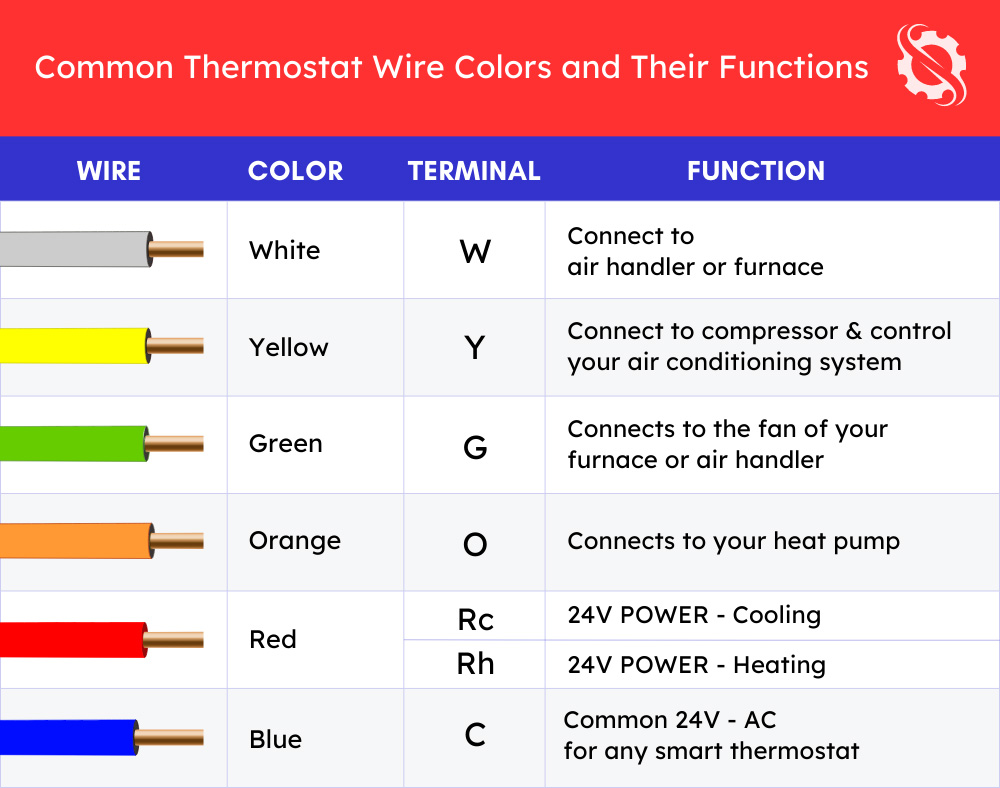
- White wires: These wires connect to your heating system. They terminate at your air handler or furnace and connect to terminal W in industry-standard thermostats.
- Yellow wires: They connect to your compressor and control your air conditioning system. The yellow wires connect to the Y terminals on your thermostat.
- Green wires: The green wire connects to the fan of your furnace or air handler. It connects to terminal G on your thermostat.
- Orange wires: The orange wire links to your heat pump, if you have one. It connects to terminal O on your thermostat.
- Red wires: These wires indicate power and you may see an Rc and/or an Rh wire. Rc wires connect to the RC terminals and Rh wire connects to the RH terminal on your thermostat.
- Blue or C wires: Blue wires are the Common wire and they are necessary for any smart thermostat that needs to be connected to a power source 24/7. This wire connects to terminal B on your thermostat.
Thermostat Wiring Code for Different Systems
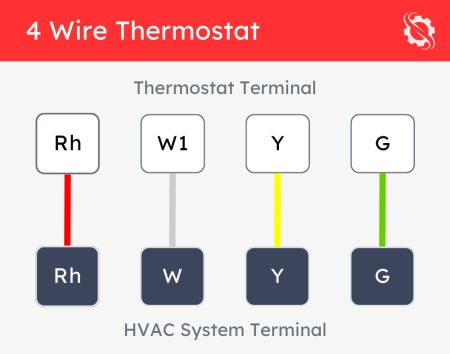
- 4 Wire Thermostat: These systems may include 1st stage furnace.
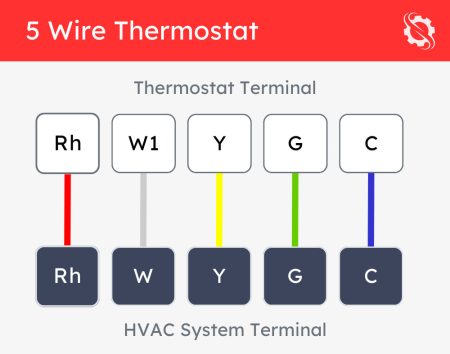
- 5 Wire Thermostat: These systems include 2 stage furnace, 1st stage furnace and st stage air conditioner, 1st stage heat pump system.
- 6 Wire Thermostat: These systems may include Furnace stage 3 Heating, 2nd Stage Furnace with 1st stage air conditioner, 1st Stage furnace with 2nd stage air conditioner, 1st Stage Heat Pump with Aux Heat, 2nd Stage Heat Pump, 1 Stage Heat Pump.

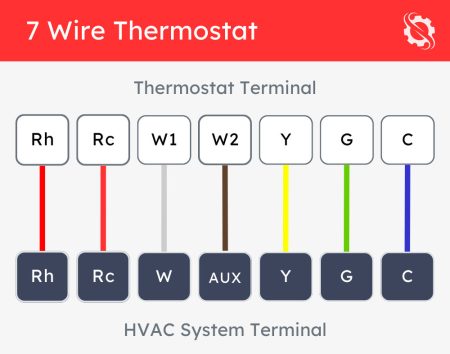
- 7 Wire Thermostat: These systems may include 2nd Stage Heat Pump with Aux Heat, 2nd Stage Heat Pump, 1 Stage Heat, 1 Stage Heat Pump, 2 Stage Heat.
Benefits of Understanding Thermostat Wire Color Codes
- DIY Installation and Troubleshooting: If you’re comfortable with handling electrical components, understanding wire color codes can assist you in installing a new thermostat or diagnosing issues with your current one, potentially saving you money on professional services.
- Safety: Knowing the function of each colored wire helps to prevent any potential hazards that could occur due to incorrect connections.
- System Compatibility: Understanding wire colors and their functions can ensure that your thermostat and HVAC system are compatible, reducing the risk of malfunctions.
- Enhanced HVAC Operation: Some thermostats may need to connect with specific HVAC components, like outdoor temperature sensors and humidifiers/dehumidifiers. Knowing wire color codes can aid in these connections, optimizing your home’s climate control.
Importance of Following the Thermostat Wiring Code

Adhering to the thermostat wiring code is crucial for several reasons:
- Ensures the safe and efficient operation of your HVAC system.
- Helps prevent damage to the thermostat, HVAC equipment, or other electrical components.
- Reduces the risk of compatibility issues or malfunctions.
Common Mistakes to Avoid While Handling Thermostat Wires
- Incorrect Wiring: The most common mistake is incorrect connections due to misunderstanding of wire color codes. Always refer to your thermostat’s manual or a trusted online guide before beginning installation.
- Ignoring Safety Precautions: Make sure to turn off the power to your HVAC system at the circuit breaker before you begin. This can help prevent any potential electric shocks or shorts that could occur during installation.
- Forcing Wire Connections: Never force a wire into a terminal if it doesn’t fit. This can damage the wire, the terminal, or both, potentially causing significant damage and expense.
Pro Tips for DIY Thermostat Installation
- Photograph Your Original Wiring: Before removing your old thermostat, take a clear photograph of the wiring. This can be a useful reference during the installation of your new thermostat.
- Label Your Wires: As you disconnect each wire, label it with the corresponding terminal letter from your old thermostat. This can make it easier to connect the wires to the correct terminals on your new thermostat.
- Use A Level: To ensure your thermostat operates correctly, it should be level when installed on the wall. Many thermostats come with built-in levels, but it’s always a good idea to double-check with your own.
- Call a Professional If Needed: While DIY installation can be cost-effective and satisfying, don’t hesitate to call a professional if you encounter any issues or if you’re not entirely comfortable with the process.

FAQs on Thermostat Wiring Color Decoding
Yes, if you’re familiar or comfortable with handling electrical components, you can install a thermostat yourself. But if you’re unfamiliar or uncomfortable with electrical systems, it’s recommended to call a professional.
Following the thermostat wiring code ensures the safe and efficient operation of your HVAC system, helps prevent damage to the thermostat and HVAC equipment, and ensures compatibility between thermostats and HVAC systems, reducing the risk of compatibility issues or malfunctions.
It’s strongly recommended to follow the thermostat wiring code when installing a thermostat. Not following the code can lead to various issues, including electrical shorts, damage to equipment, incorrect temperature control, and safety hazards.
While there are common color codes for thermostat wires, it’s important to note that not all thermostats use the exact same color coding. Always refer to the specific wiring diagram provided by the manufacturer of your thermostat.