

Furnace Won’t Turn On? Check These 5 Things Before Calling an HVAC Technician
Your furnace isn’t turning on and it’s cold inside. Before you pick up the phone and book a costly service call, there are five things you can check yourself that cover the vast majority of furnace problems. Most of them take minutes, cost nothing, and require no technical experience whatsoever.
This guide walks you through each one in order — starting with the most common causes first.
1. Dirty Air Filter
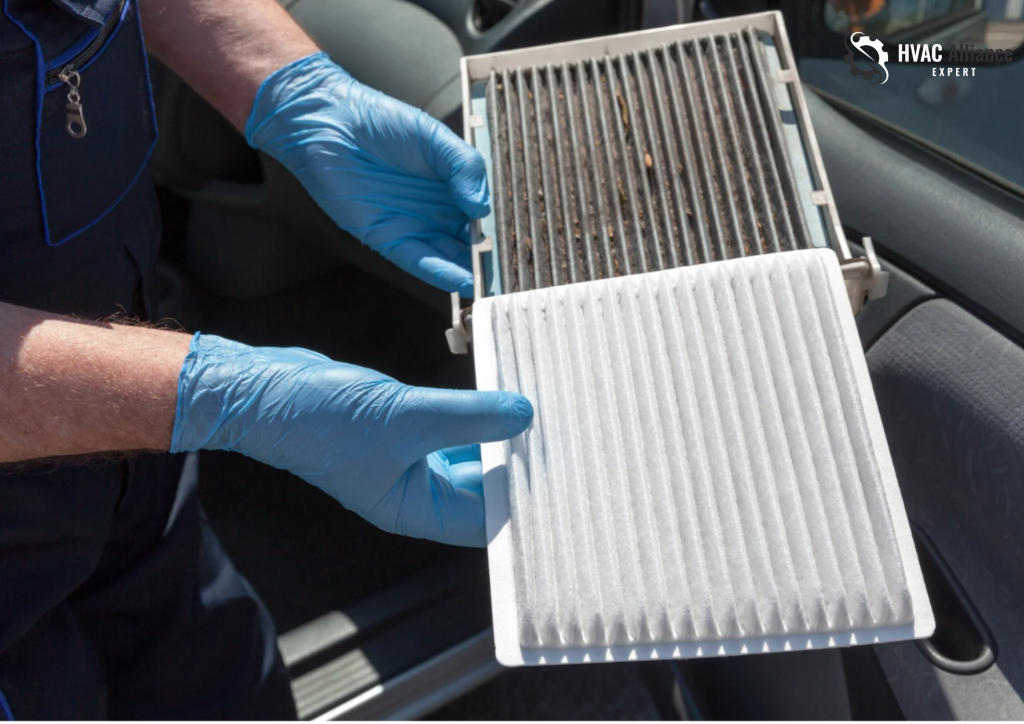
This is the first thing to check and the most common cause of furnace problems. A dirty air filter restricts airflow through the heat exchanger. When the furnace can’t move enough air, it overheats and shuts itself off as a safety measure — and it won’t come back on until the problem is fixed.
Pull your filter out and take a look at it. If it’s visibly dirty or clogged, replace it with a new one. Then reset the system by flipping the power switch off, waiting 10 to 15 seconds, and switching it back on. If your furnace has a plug rather than a switch, simply unplug it, wait, and plug it back in.
If you’ve been running a dirty filter for a long time, it’s also worth checking the coil inside the furnace. Debris that gets past the filter over the years can clog the coil and restrict airflow enough to cause the same overheating problem. If you look inside and it’s visibly dirty, that will need cleaning separately.
2. Dirty Flame Sensor
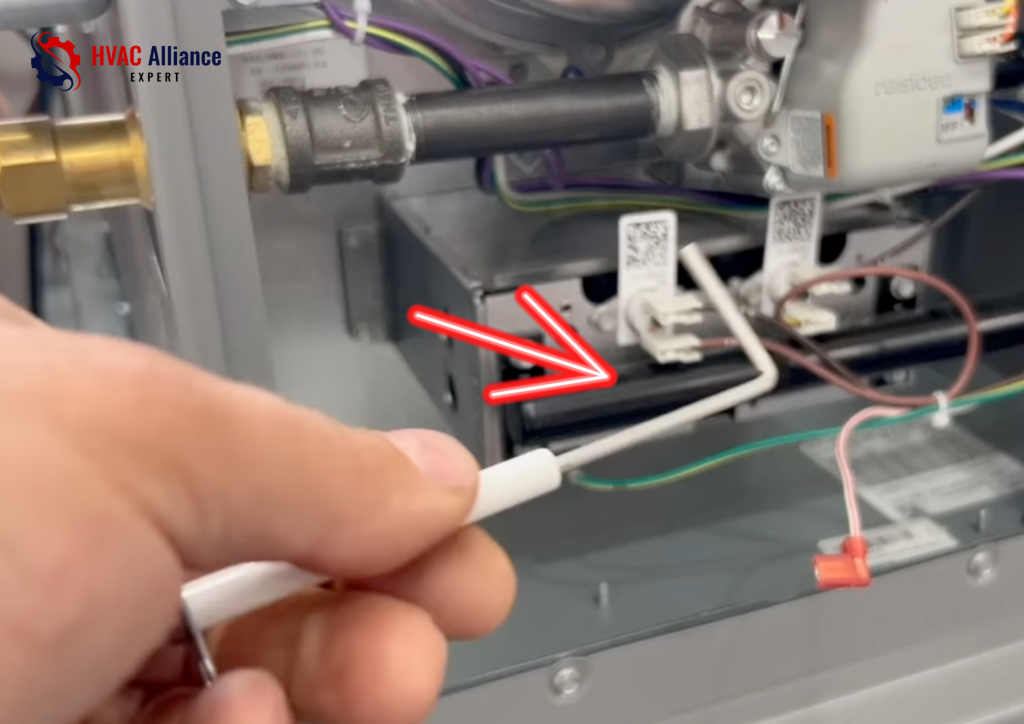
This is the second most common cause of furnace problems and it’s one of the easiest to fix yourself.
The flame sensor’s job is simple — it detects whether a flame is present when the furnace kicks on. When the sensor gets dirty, it can’t do its job properly. The result is that the furnace lights up briefly and then shuts off after a couple of seconds. If you’ve noticed your burners flickering on and then cutting out, this is almost certainly why.
To fix it, locate the flame sensor inside the burner assembly — it has a single wire connected to it. Remove the one screw holding it in place, pull it out, and clean the sensor rod gently. Once it’s clean, put it back in and test the furnace. If the flames stay on this time, you’ve fixed it. Between a dirty filter and a dirty flame sensor, these two issues account for the majority of furnace service calls.
3. Blower Motor, Capacitor, or Blown Fuse
If the filter and flame sensor both look fine, the next area to check is the blower motor.
First, make sure the power is completely off and the door switch is disengaged. Then reach in and try to spin the blower wheel by hand. If it spins freely with no resistance, the motor is likely fine. If it feels stiff, seized, or hard to turn, the blower motor has probably failed and will need replacing.
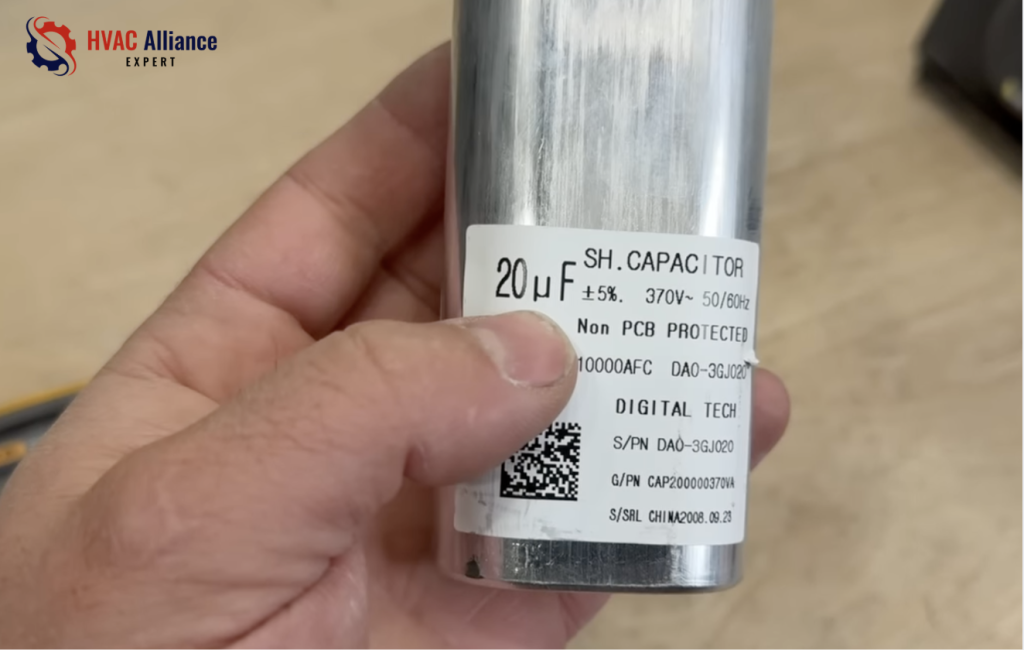
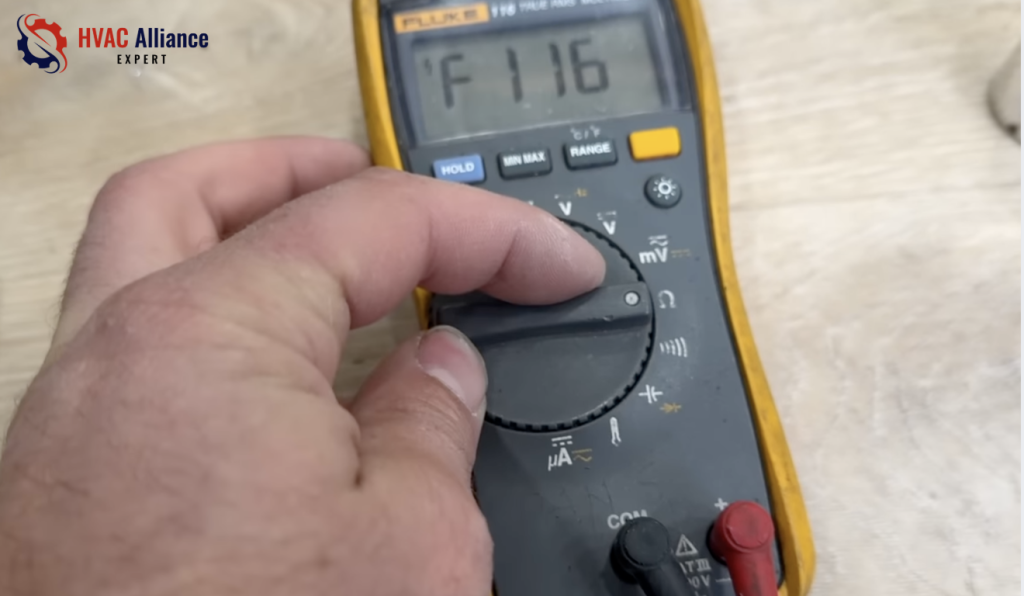
While you’re in there, check the capacitor — a small cylindrical component that helps the motor start. A bad capacitor is a very common reason a blower motor won’t run even when it looks physically fine. Signs of a bad capacitor include visible fluid leaking from it, the top prongs mushrooming outward instead of pointing straight up, or a reading on a voltmeter that falls outside the rated value by more than 5%. Capacitors are inexpensive and available on Amazon — just make sure the replacement matches the exact rating and voltage of the original.
Also check the fuse on the control board. On many furnaces there’s a small 3-amp fuse that’s easy to miss. If it’s blown you’ll see black discoloration on the plastic casing and the small metal strip inside will be visibly broken. Replacing a fuse is something any homeowner can do and it costs almost nothing.
4. Inducer Motor or Blocked Exhaust Vent
The inducer motor is the first component that runs when your furnace starts up. Listen carefully when the furnace tries to come on — the inducer should sound smooth and consistent. If you hear grinding or metal-on-metal sounds, the inducer motor is likely failing. When the inducer isn’t running properly, it trips the pressure switch and prevents the furnace from turning on at all.
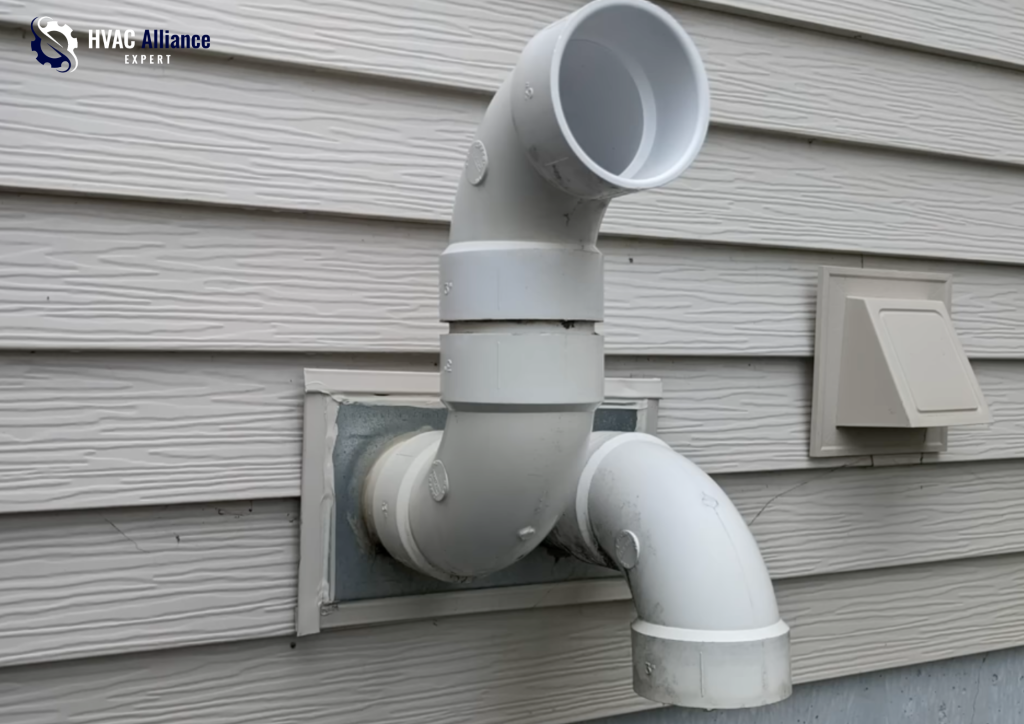
Before assuming the motor itself is bad, check your exhaust and intake vents first. These are PVC pipes that run through the exterior wall of your home. Birds, hornets, dirt daubers, and debris can all block these vents — and a blocked vent is enough to stop the furnace from running entirely. Go outside, find where the vents exit the house, and make sure nothing is obstructing them. This is one of those fixes that takes two minutes and occasionally solves the whole problem.
5. Faulty Igniter
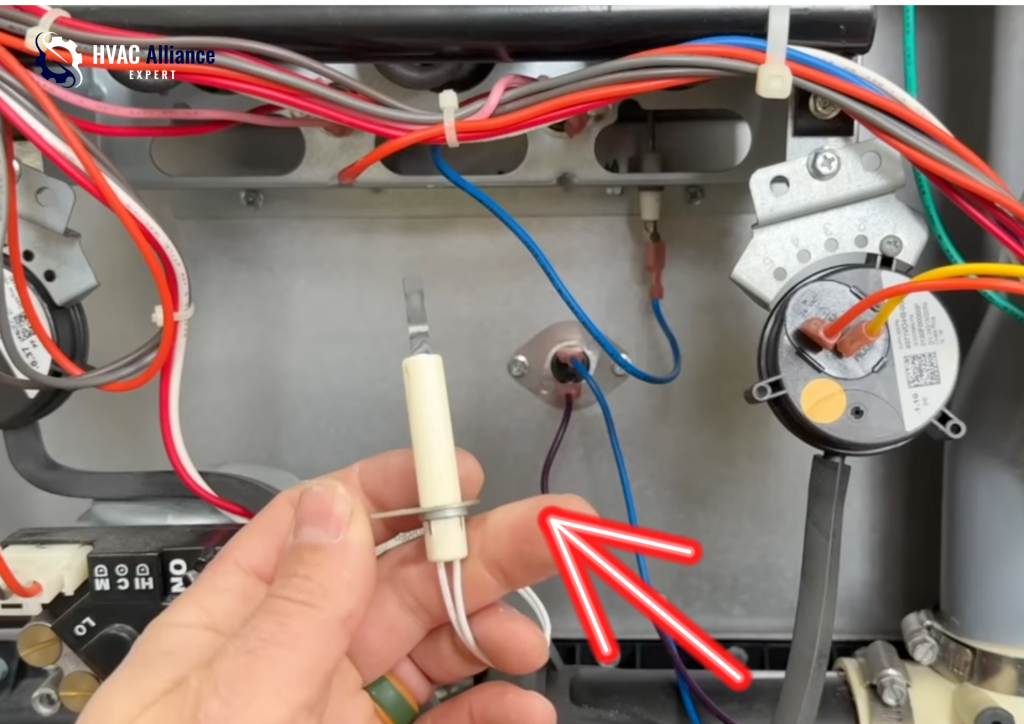
The igniter is what lights the gas when your furnace starts. Here’s the sequence: the inducer runs for about 30 seconds, then you should see an orange glow appear in the burner area — that’s the hot surface igniter heating up to ignite the gas. If you hear the inducer running but never see that orange glow, the igniter has likely failed.
Hot surface igniters are the most common type and also the most fragile. They’re made of a brittle material that can crack easily — even touching them with bare hands can damage them. If you look inside the burner assembly and see broken fragments sitting at the bottom, that’s your igniter.
The good news is they’re straightforward to replace. Remove the single screw, disconnect the two wires, and fit a universal hot surface igniter in the same position as the old one. Polarity doesn’t matter when reconnecting the wires. Make sure the tip of the new igniter is lined up correctly with the burner so it will actually ignite the gas when it heats up.
One More Thing — Check the Error Code
Most modern furnaces have a diagnostic display on the control board that flashes an error code when something goes wrong. Before or after working through these five steps, check the code plate on your furnace and look up what the flashing pattern means. It will often point you directly to the problem and save you a lot of guesswork.
When to Call an HVAC Technician
These five checks cover the most common furnace problems and many homeowners fix the issue themselves by working through them. However, call a qualified HVAC technician if:
- You smell gas at any point — leave the house immediately and call your gas company first
- The furnace trips the breaker repeatedly
- You’ve worked through all five steps and the furnace still won’t turn on
- The inducer motor is grinding and needs replacing
- Any repair involves the gas valve or heat exchanger
These five checks cover the most common furnace problems and many homeowners fix the issue themselves by working through them. However, call a qualified HVAC technician if:
- You smell gas at any point — leave the house immediately and call your gas company first
- The furnace trips the breaker repeatedly
- You’ve worked through all five steps and the furnace still won’t turn on
- The inducer motor is grinding and needs replacing
- Any repair involves the gas valve or heat exchanger
FAQs
Start with the basics — check the thermostat settings and batteries, make sure the power switch is on, and check the circuit breaker. If all of that looks fine, work through the five steps above starting with the air filter.
The clearest sign is a furnace that lights up briefly and then shuts off after a few seconds. The burners come on, the flame appears, and then everything cuts out. That cycle repeating itself is almost always a dirty flame sensor.
Yes. A severely clogged filter restricts airflow enough to cause the furnace to overheat. The system shuts itself off as a safety measure and won’t restart until airflow is restored. Replacing the filter and resetting the system is always the first thing to try.
Look for fluid leaking from the casing, the top terminals mushrooming outward at an angle instead of pointing straight up, or a voltmeter reading that falls more than 5% below the rated value printed on the capacitor.
Every 1 to 3 months depending on your household. If you have pets, allergies, or run the system heavily, check it monthly. A clean filter is the single most important thing you can do to keep your furnace running reliably.